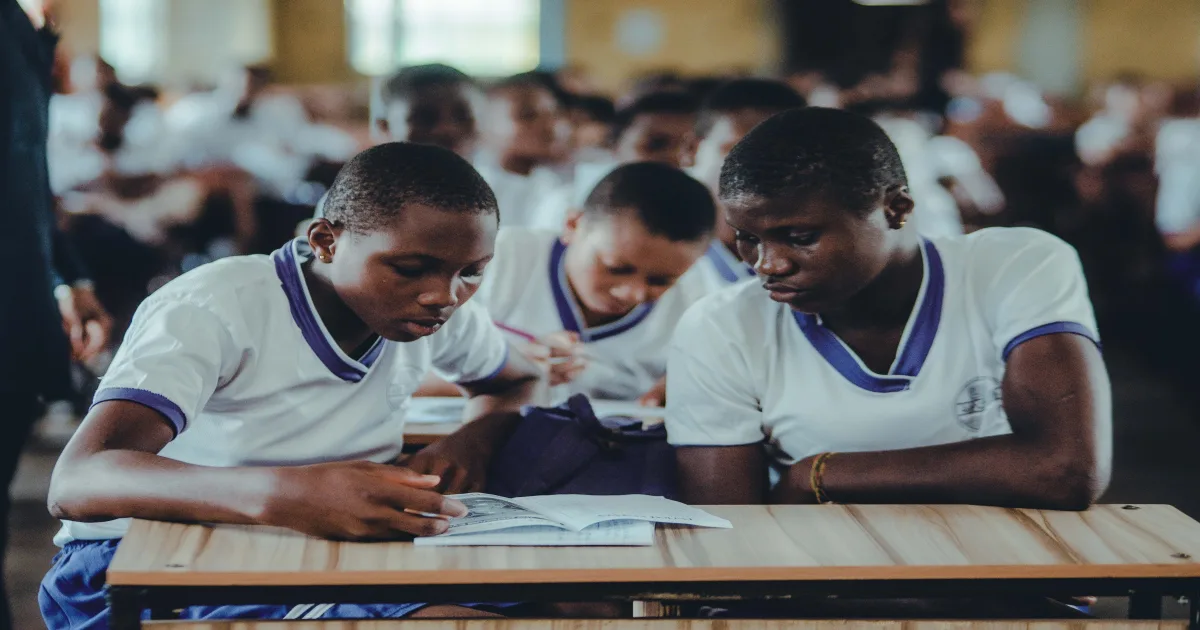
Grade 9 is the final year of junior secondary school under Kenya's Competency Based Education system. Your child is preparing for the KJSEA, building three years of School-Based Assessment, and choosing a senior school pathway. Yet most parents have never seen a plain-language breakdown of what their child studies every single day. This guide covers all nine learning areas, how each is assessed, and what it means for placement.
How Grade 9 is structured
Grade 9 sits in the junior secondary school band alongside Grade 7 and Grade 8. All three years follow the same nine learning areas. What changes in Grade 9 is the depth of content, the weight of School-Based Assessment accumulated over three years, and the fact that the year ends with the KJSEA, Kenya's national assessment for junior secondary school.
Junior secondary school runs from Grade 7 to Grade 9. The first cohort of CBE learners reached Grade 7 in January 2023 and sat the KJSEA at the end of Grade 9 in October 2026. All nine learning areas are compulsory. There are no optional subjects in junior secondary school.
The nine learning areas are grouped into three clusters. Understanding the clusters helps you see how subjects connect and why they are taught together.
Cluster 1: Humanities and Social Sciences
| Learning Area | What it covers | Why it matters |
|---|---|---|
| English | Reading comprehension, writing, grammar, oral communication, literature | Core communication skill used across all subjects and in the workplace |
| Kiswahili / Kenya Sign Language | Reading, writing, oral expression, grammar, Fasihi. Learners with hearing impairment study Kenya Sign Language instead | National language proficiency and cultural identity |
| Religious Education | CRE, IRE, or HRE depending on the learner | Values, ethics, and moral reasoning |
| Social Studies and Life Skills Education | History, geography, civics, environmental education, personal development | Understanding Kenya, the world, and how to navigate adult life |
Cluster 2: Science, Technology and Innovation
| Learning Area | What it covers | Why it matters |
|---|---|---|
| Mathematics | Numbers and operations, algebra, geometry, statistics, financial mathematics | Foundation for STEM pathway and everyday problem solving |
| Integrated Science and Health Education | Biology, chemistry, physics, and health concepts taught as one connected subject | Builds scientific thinking and is a key indicator for STEM pathway placement |
| Agriculture, Nutrition and Home Science | Crop and animal production, food and nutrition, home management, environmental conservation | Practical life skills and foundation for agricultural and food science careers |
Cluster 3: Engineering and Applied Sciences
| Learning Area | What it covers | Why it matters |
|---|---|---|
| Pre-Technical Studies, Business Studies and Computer Science | Technical drawing, basic engineering concepts, entrepreneurship, business principles, computer literacy | Prepares learners for technical and business pathways in senior school |
| Creative Arts, Visual and Performing Arts, and Sports | Visual art, music, drama, dance, and physical education combined into one learning area | Develops creativity, physical fitness, and is the foundation for the Arts and Sports Science pathway |
How Grade 9 is assessed
Assessment in Grade 9 works in two layers. The first is School-Based Assessment, which runs continuously across all three years of junior secondary school. The second is the KJSEA, the national assessment at the end of Grade 9.
School-Based Assessment
School-Based Assessment records your child's performance on tasks, projects, and teacher observations throughout Grades 7, 8, and 9. It is not a single exam. It is a running record of competency built up over three years. This record contributes 20 percent of the final senior school placement score.
Because SBA accumulates over three years, a learner cannot recover a weak Grade 7 or Grade 8 SBA record by performing well in Grade 9 alone. Consistent effort across all three years is what counts.
The KJSEA
The Kenya Junior Secondary Education Assessment is a national examination administered by KNEC at the end of Grade 9. It tests all nine learning areas. Results are reported using the four CBE achievement levels: Below Expectation, Approaching Expectation, Meeting Expectation, and Exceeding Expectation.
The KJSEA contributes 60 percent of the senior school placement score. It is the single largest factor in placement, but it does not work alone. For a full breakdown of how the scoring works, read our guide on how KJSEA marks are calculated.
What results mean for senior school placement
At the end of Grade 9, every learner is placed into one of three senior school pathways based on their combined placement score. The three pathways are STEM, Social Sciences, and Arts and Sports Science.
| Component | Weight | When it happens |
|---|---|---|
| KJSEA at the end of Grade 9 | 60% | End of Grade 9 |
| KPSEA at the end of Grade 6 | 20% | End of Grade 6 |
| School-Based Assessment across Grades 7, 8 and 9 | 20% | Continuous across three years |
Performance in Mathematics and Integrated Science carries particular weight for STEM pathway placement. Learners who consistently achieve Meeting Expectation or Exceeding Expectation in these two areas are well positioned for STEM. For a full explanation of where each pathway leads, read our guides on CBE STEM pathway careers, Social Sciences pathway careers, and Arts and Sports Science pathway careers.
For a complete breakdown of how the placement formula is applied, read our guide on how senior school placement is calculated in Kenya.
How to support your child at home
Grade 9 is a high-stakes year but it does not require parents to become subject experts. The most effective support is consistent, calm, and practical.
Create a study routine that covers all nine learning areas across the week rather than focusing only on Mathematics and Science. Learners who neglect Creative Arts or Religious Education lose placement points that are difficult to recover. Every learning area contributes to the final score.
Talk to your child's teachers about their SBA standing before the end of each term. SBA records are updated termly and teachers can tell you which learning areas need more attention. Waiting until the KJSEA to discover a weak SBA record is too late to act.
Grade 9 is not a single exam year. It is the final chapter of three years of continuous learning. The learners who do well are those whose parents understood the system early, stayed engaged with SBA throughout, and helped build steady habits. If your child is in Grade 7 or Grade 8 right now, read our guides on CBE Grade 7 and CBE Grade 8 to see how the content builds year by year.